Rooted in Resilience
Local Entrepreneurs, Nonprofits Thrive With a CDFI in Their Corner
By Kevin Allenspach | Photography by Paul Middlestaedt
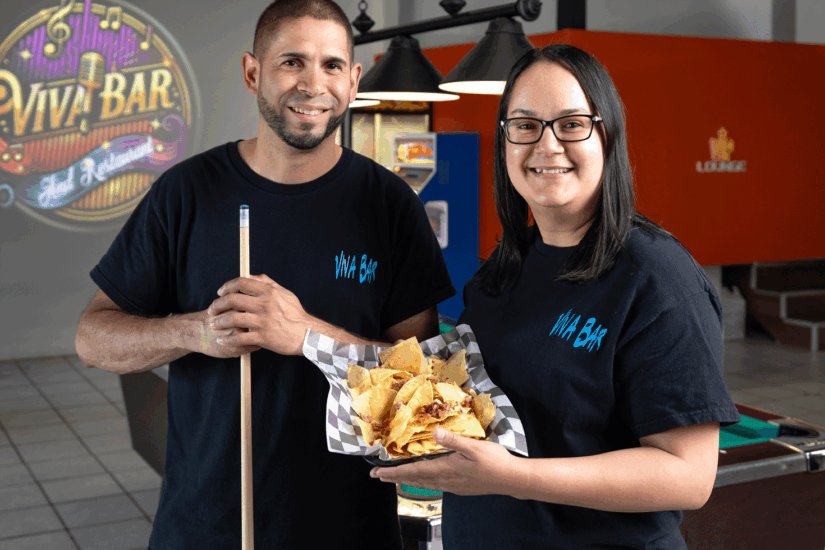
In downtown Long Prairie, the thrum of music and buzz of conversation fill a once-vacant century-old building. At Viva Bar and Restaurant, owners Gabrier Perez and Miozoti Nieves have transformed a long-empty main street space into a local gathering hub. Upstairs, six newly renovated apartments offer much-needed housing in a tight rental market.
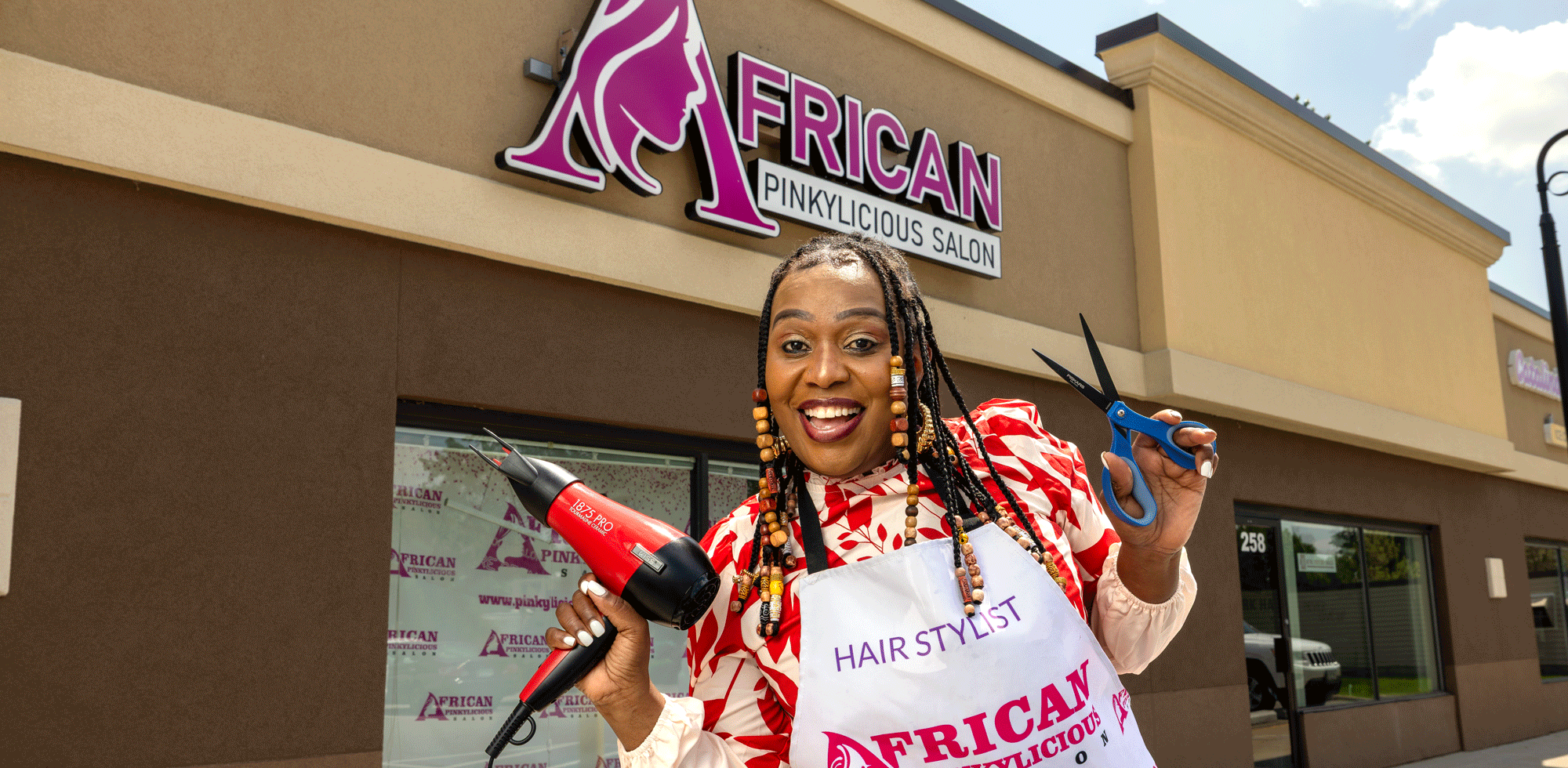
An hour away, in Waite Park, Gladys Winkelman stands under a newly installed three-dimensional lighted sign outside African Pinkylicious Salon. After nearly closing when faced with unexpected building requirements, the boost in visibility has elevated her hair-braiding business and helped to attract a growing base of new customers.
And in Sauk Centre, Eagle’s Healing Nest is back to business as usual. After financial setbacks nearly forced the veteran-support organization to shut its doors, a new leadership team has stabilized the mission-driven nonprofit for those recovering from PTSD, anxiety, addiction and the wounds of war.
Different stories, shared challenges and a common thread: All three businesses received flexible, mission-driven loans from the Initiative Foundation—a Community Development Financial Institution (CDFI) certified by the U.S. Department of the Treasury. Through microloans, strategic lending partnerships and business coaching, the Foundation and its Impact Fund lending team help fill gaps that likely would not have garnered loan support from more traditional lenders.
“These are the kinds of investments that lift up entire communities,” said Kate Barr, senior advisor to the Minnesota CDFI Coalition, which the Initiative Foundation helped to create in 2022. “CDFIs like the Initiative Foundation don’t just finance projects—they help fuel hope, stability and generational opportunity.”
Whether it’s helping early-stage entrepreneurs, preserving services for vulnerable veterans or reviving rural downtowns, the Initiative Foundation’s lending program is designed to meet people where they are, positioning borrowers for long-term success by helping them graduate to mainstream lending.
From Vision to Viva
Entrepreneurs Gabrier Perez and Miozoti Nieves have built a reputation for turning challenges into opportunities. Their latest venture, Viva Bar and Restaurant, transformed a formerly abandoned building into a vibrant community hub with much-needed apartments on the upper floor.
Financing the extensive renovation posed a challenge, but Perez secured an $80,000 grant administered by the Initiative Foundation through the Minnesota Department of Employment and Economic Development’s Main Street Economic Revitalization Program. The grant supported the apartment build-out, addressing a local housing shortage while strengthening the project’s financial foundation.
To launch Viva Bar and Restaurant, Perez and Nieves—transplants to Central Minnesota from the U.S. territory of Puerto Rico—partnered on a $125,000 loan from the Initiative Foundation and its subsidiary, the Impact Fund.
“Gabrier and Miozoti did a lot of the work themselves—they just needed help covering some of the cost,” said Doug Adams, Impact Fund finance manager. “The apartments gave us a compelling reason to get involved. It helped cash-flow the bar and restaurant idea. This building had a ton of potential. It just needed someone to believe in it.”
Viva Bar brings a big-city vibe to the rural town of 3,700. The venue seats 250 and features a circular bar, a dance floor with a DJ booth and sound system, VIP lounges, and an amusement area with a pool table and coin-operated games.
“The Initiative Foundation believed in this project,” said Nieves, a former bank teller and translator. “Without them, we wouldn’t have gotten the funding. We wouldn’t have been able to do anything. They were our main driver.”
Luan Thomas-Brunkhorst, director of the Long Prairie Chamber of Commerce, praised the pair’s resourcefulness: “They’re go-to people in town. This was probably a $500,000 project they pulled off. And it wouldn’t have happened without the Initiative Foundation stepping in to close the gap. Now, we have a building that was once an eyesore that is now a welcome main street business.”
Viva Bar is located at 140 Central Ave. in Long Prairie. Hours are Tuesday through Thursday from 11 a.m. to 10 p.m., and Friday and Saturday from 11 a.m. to 2 a.m. The menu features Puerto Rican favorites like carne frita and pechuga, alongside burgers, soups and hearty entrees for dine-in or takeout.

Standing With Veterans
In 2024, Air Force veteran Aaron Starrett found himself in crisis—jobless and homeless in his hometown of Austin, Texas. A decade removed from his military service, he missed the camaraderie and purpose of life in uniform.
“I got to a very bad spot,” Starrett said. “If it wasn’t for my very forward-thinking sister, I’m not sure what would’ve happened, but it wouldn’t have been good.”
Starrett’s sister searched online and found Eagle’s Healing Nest, a nonprofit campus in Sauk Centre that serves veterans and their families coping with PTSD, anxiety and addiction. Within days, Starrett arrived and began rebuilding his life.
“He’s one of the reasons Eagle’s Healing Nest exists,” said Eagle’s Healing Nest Director Shawn Kor, a former Marine and retired Minnesota Army National Guard command sergeant major. “He’s a brother who needed help.”
Founded in 2012 by a military mom, Eagle’s Healing Nest houses up to 75 residents on a 124-acre campus that once served as a juvenile reformatory. Its approach is unique: no referrals, no time limits, no cost to residents. The nonprofit relies on donations, grants and service reimbursements to cover expenses.
In 2022, a state investigation prompted leadership changes and the suspension of the organization’s nonprofit status. Kor took on the director role in 2023, knowing he and his new board were inheriting an organization with reputational damage and looming foreclosures on two properties.
“We were under the gun,” he said. “We approached some banks that were willing to help, but we needed the Initiative Foundation to join the lenders to put together a package that would save us. If it weren’t for that, we would’ve had to shut down.”
The contracts for deed were converted into traditional 20-year mortgages, thanks to a team effort from the Initiative Foundation, United Prairie Bank and Minnesota National Bank.
“This was a mission-driven loan,” explained Tim Swanson, business finance manager for the Initiative Foundation. “Veterans need this support, and we were glad to be the missing piece to the puzzle.”
Eagle’s Healing Nest supports residents with five pillars: physical and mental health, social connection, spiritual healing and service to others. It offers peer-to-peer programs, creative therapies, and transportation to Veterans Affairs services—with more than 2,000 trips to the St. Cloud VA last year.
Today, Starrett is thriving as a peer leader. “I’ve got goals I want to accomplish and opportunities to pursue now,” he said. “I’m not sure exactly when it will happen, but I know the time is coming when I’ll soar the nest.”
If you know of a veteran in need of support, call (320) 351-6200 or visit eagleshealingnest.org.
Braiding Business and Belief
When her landlord required all tenants to upgrade to new lighted signs, Gladys Winkelman faced a painful possibility: pay nearly $15,000 or risk losing her braiding salon.
“I felt overwhelmed and didn’t know what to do,” said Winkelman, owner of African Pinkylicious Salon in Waite Park. “If I couldn’t find some help to do it, I was faced with maybe closing for a while.”
Winkelman had built a loyal client base over more than a decade, with customers traveling from across Central Minnesota and the Twin Cities for braiding services that can take hours and cost hundreds of dollars. She leads a small team that specializes in cornrows, twists, extensions and more.
Originally from Kenya, Winkelman came to the United States to study nursing but discovered her calling in hair artistry. After relocating the shop to a high-traffic strip mall near the intersection of Second Avenue South and Highway 23 in Waite Park, her business grew—until the signage ultimatum threatened her lease.
Winkelman’s plain black-and-pink placard no longer met building requirements. Lacking any real collateral, she had few options for a bank loan.
That’s when a client pointed her to the Initiative Foundation. As a Community Development Financial Institution (CDFI), the Foundation provides flexible lending to entrepreneurs who face barriers to traditional financing.
“Gladys was at real risk of losing her space,” said Doug Adams, Initiative Foundation Impact Fund finance manager. “She had a strong business, but no collateral a bank could work with.”
Winkelman secured a $10,000 microloan from the Initiative Foundation. It covered the cost of a professionally made illuminated sign—saving her lease and boosting traffic.
“We have people just come walking in here now,” she said. “It was such a good decision. The sign really gets attention.”
With the salon thriving, Winkelman is eyeing her next goal: opening a barbershop.
“She was already doing the hard work,” Adams said. “We just helped her navigate a slight roadblock.”
To learn more, visit africanpinkylicioussalon.com.
INSPIRED BY THESE STORIES?
If you’re an entrepreneur, nonprofit leader or community changemaker with a bold idea and a financing gap, connect with a member of the Initaitive Foundation’s Impact Fund lending team. Together, we can turn your vision into momentum. Visit ifound.org/business-services/lending
Capital Connections: Meet the Impact Fund Board
When Air Force veteran Aaron Starrett arrived at Eagle’s Healing Nest in Sauk Centre, he had no job, no home and no clear way forward. Within months, the nonprofit campus for veterans had given him stability, purpose and a path to rebuild his life. But the Nest itself was in crisis—facing foreclosure until a financing partnership, including the Initiative Foundation, stepped in to keep its mission alive.
The Initiative Foundation is one of nearly three dozen certified Community Development Financial Institutions (CDFIs) in Minnesota and among almost 1,500 nationwide. Certified by the U.S. Department of the Treasury since 1997, the Initiative Foundation and its CDFI peers across the nation fill lending gaps that traditional banks can’t always bridge, especially in rural and underserved communities.
In 2023, the Foundation created the Impact Fund, a wholly owned subsidiary with its own board of directors. Working independently or alongside banks and credit unions, the Impact Fund helps entrepreneurs and nonprofits secure the funding they need—often with flexible terms and tailored support.
We sat down with the five Impact Fund board members and asked them to share their perspectives on this work, the region’s needs and the opportunities ahead. Board members include Shirwa Adan, CEO of Credent Care in St. Cloud; Rob Aitken, executive director of Leech Lake Financial Services; Brett Anderson, a member of the Initiative Foundation’s Board of Trustees and vice president and branch manager at First National Bank of Milaca; Baabiitaw Boyd, adjunct faculty at Fond du Lac Tribal and Community College and Bemidji State University; and Nick Tietz, founder and CEO of ILT Academy based in St. Cloud. Here’s what they had to say:
What is your take on the Impact Fund’s mission, and why is it important for Central Minnesota?
Tietz: The Impact Fund is here to back underestimated entrepreneurs and business leaders in Central Minnesota. It’s important work because it provides a better path for emerging entrepreneurs and their long-term success. Strong, vibrant communities need sustainable businesses that build wealth, create jobs and empower entrepreneurs to do what they do best: build new futures.
How do CDFIs support small businesses differently from traditional financial institutions?
Anderson: Access to capital is foundational to community health, and we’re fortunate to have many strong banks in our region that support local businesses. However, there are moments when traditional financing isn’t quite enough, whether due to risk profile, collateral limitations or simply timing. As a CDFI, we do not compete with our local banks. We bring flexible capital and targeted expertise to the table, helping entrepreneurs move forward when conventional financing might fall short. In doing so, we not only support the entrepreneur directly, but also strengthen the broader ecosystem by partnering with our local financial institutions to ensure businesses get the full support they need to thrive.
What inspired you to join the Impact Fund board of directors?
Adan: As a small business founder in Central Minnesota, I’ve had the privilege to support countless entrepreneurs and business owners through my previous work. Nothing energizes me more than helping others succeed—whether through mentorship, resources or simply being a trusted advocate. Joining the Impact Fund Board allowed me to expand that mission, empowering even more local businesses and aspiring visionaries to thrive. Together, we can build a stronger, more vibrant economy rooted in collaboration and shared growth.
What unique perspective or experience do you bring to the board?
Boyd: I was raised in a rural small town, attended public school and pursued a specific path to uncover gaps in my education regarding Ojibwe language and culture. From that point on, my cultural apprenticeship shaped my decision-making framework, and it fueled my desire to participate in community building for the betterment of all.
Describe a moment or story that made you especially proud to serve on this board.
Aitken: One of the moments that stands out most was our very first board meeting. I realized I was surrounded by people with deep expertise and a commitment to reinvesting in Central Minnesota’s communities. As a tribal member of the Minnesota Chippewa Tribe, Leech Lake Band, I felt proud to bring my own perspective—rooted in a history of working with historically disadvantaged communities—to this new effort. That meeting made it clear we weren’t just overseeing a fund; we were joining forces to provide affordable capital and hands-on support for entrepreneurs and nonprofits who might otherwise be overlooked. Seeing that shared passion in action confirmed for me that this board has the right mix of vision and dedication to make a real difference.
What are some of the biggest challenges rural entrepreneurs face, and how does the Impact Fund help address them?
Tietz: Rural entrepreneurs face tough challenges: limited access to capital, fewer mentorship and networking opportunities, and long distances from key resources or support systems. It can feel like you’re building a business on an island. The Impact Fund helps bridge those gaps. We offer flexible funding options, business training and personalized support that meets founders where they are. It’s not just about loans—it’s about surrounding rural entrepreneurs with the tools, knowledge and connections they need to grow strong, sustainable businesses right in their own communities.
What are your hopes for the future of the Impact Fund and the communities it serves?
Boyd: My hope is that we continue to evolve and address inequities, and that we always consider communities in our region where traditional approaches to economic development have been unsuccessful.
Editor’s note: Responses have been edited for length and clarity.
Learn more about the Impact Fund.