Connection & Community
How two Central Minnesota projects are creating belonging
By Jon Spayde
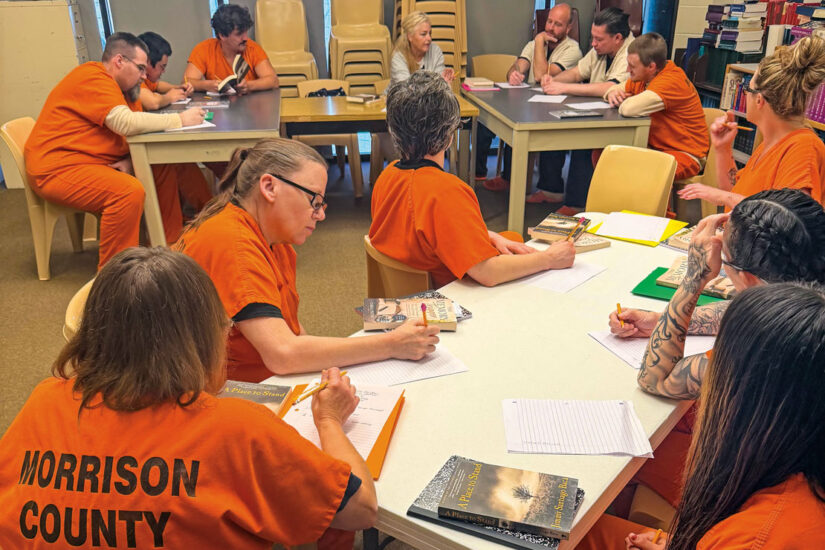
Derek Plante was serving time in the Morrison County jail in Little Falls when he noticed a program on the inmate activity list called the Write On! Workshop.
An occasional songwriter, Plante signed up for the biweekly program, where participants explore poetry and other forms of creative writing with the help of a volunteer instructor.
One day, he wrote a poem that was, in essence, a letter to his mother.
“It was about when I was younger, and my mom used to tell me that I was messing up in life, and I needed to change,” he said. “I didn’t really care what she said back then. And now that I was sitting in a lonely place we call a prison, which had trapped me in my head and physically, I understood that what she said was true—after all that time.”
When Plante read the poem aloud, he could see its effect on the room.
“There was this guy next to me who was almost crying,” he said. “Not quite crying, but he was like, ‘Dude, when you were reading that, I was shaking, dude. That gave me goosebumps.’”
For Plante, the experience was transformative.
“It felt good. I felt like a real writer,” he said.
The moment Plante felt like “a real writer” is exactly the kind of outcome Becky Olson hoped for when she launched Write On! at the Morrison County jail during summer 2024. It’s also the type of connection the Initiative Foundation seeks to foster through its Joy & Connection grants.
Since 2024, the Initiative Foundation has invested more than $350,000 to support community-led projects that help people build relationships, strengthen community ties and find a greater sense of belonging across Central Minnesota.
“We know that the secret sauce of community is connectedness, people feeling like they belong,” said Amy Trombley, vice president for community at the Initiative Foundation. “We asked ourselves, ‘How do we as an organization try to inspire opportunities for this type of belonging, this type of social connectedness, in their communities?’”
The answers are as varied as the communities themselves. Some projects connect generations. Others create space for creative expression, cultural celebration or simply spending time together. What they share is a focus on helping people find common ground and a stronger sense of belonging.
The Power of Words
For Becky Olson, that opportunity took the form of a notebook, a pen and a circle of writers inside the Morrison County jail.
After earning an English degree and spending a brief stint as a tutor, Olson found herself thinking about teaching again.
“I thought about setting up some kind of community education class or something. I knew what writing could do for a soul,” she said. “Give a man or a woman a pen, and it can really affect their life—because of the power of words to express your values, your hopes, your dreams.”
Then she began thinking about where those benefits might be needed most.
“If there’s a hopeless demographic of people, it’s probably those behind bars,” she said. “I could do something with writing to maybe help them have some hope so they come out a little better than when they went in.”
Olson approached jail officials with the idea and received permission to launch Write On! in the summer of 2024. The workshops quickly gained traction. Participants filled notebooks with poems, reflections and stories, and Olson found herself scrambling to keep up with demand for pens, paper, books and dictionaries.
“Some of the guys filled up their notebooks so quickly it was hard to keep up,” she said.
When local donations began running thin, Olson applied for a Joy & Connection grant on behalf of the Morrison County jail. The funding helped provide a stable foundation for the growing program.
“When I got the email, I was as excited as I’d won the Publishers Clearing House sweepstakes!” Olson recalled.
The workshop’s success soon extended beyond the jail walls.
Impressed by the quality of the writing she was seeing, Olson worked with the Morrison County Record to create a half-page showcase of inmate poetry four times a year.
The work is reviewed by a panel assembled by Olson, including literary friends, an English teacher and acclaimed poet Jimmy Santiago Baca, who began writing while incarcerated and went on to build an internationally recognized literary career.
One of the poems selected for publication was Derek Plante’s letter to his mother.
For Olson, moments like that are evidence that a simple act of self-expression can become something bigger: a chance to be heard, understood and connected to others.
LGBTQ+ Seniors Find Community
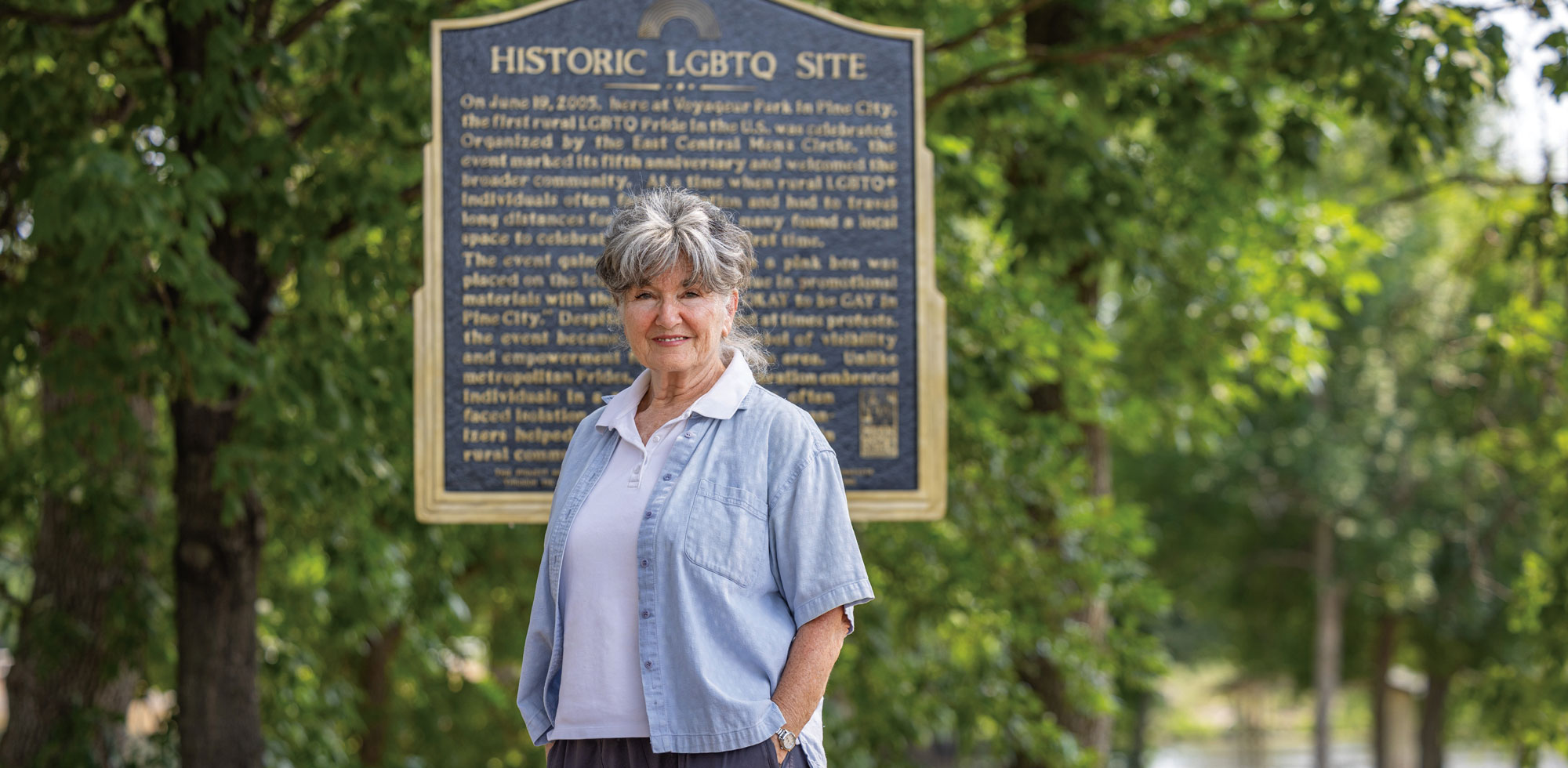
In 2005, members of the East Central Men’s Circle organized a picnic in Pine City’s Voyageur Park that is now recognized as the first rural Pride event in the United States.
What began as a modest gathering evolved into East Central Minnesota Pride (ECM Pride), a nonprofit that advocates for rural LGBTQ+ residents and produces an annual celebration that now draws thousands of attendees. In 2026, Pine City dedicated a historical marker commemorating the 2005 event’s place in LGBTQ+ history.
Its success, however, revealed a new challenge.
As the annual Pride celebration grew larger, some older LGBTQ+ adults found it harder to navigate and fully enjoy.
“We decided to do something special for our older community, in the middle of the day, and indoors,” said Valerie Mondor, a board member of ECM Pride.
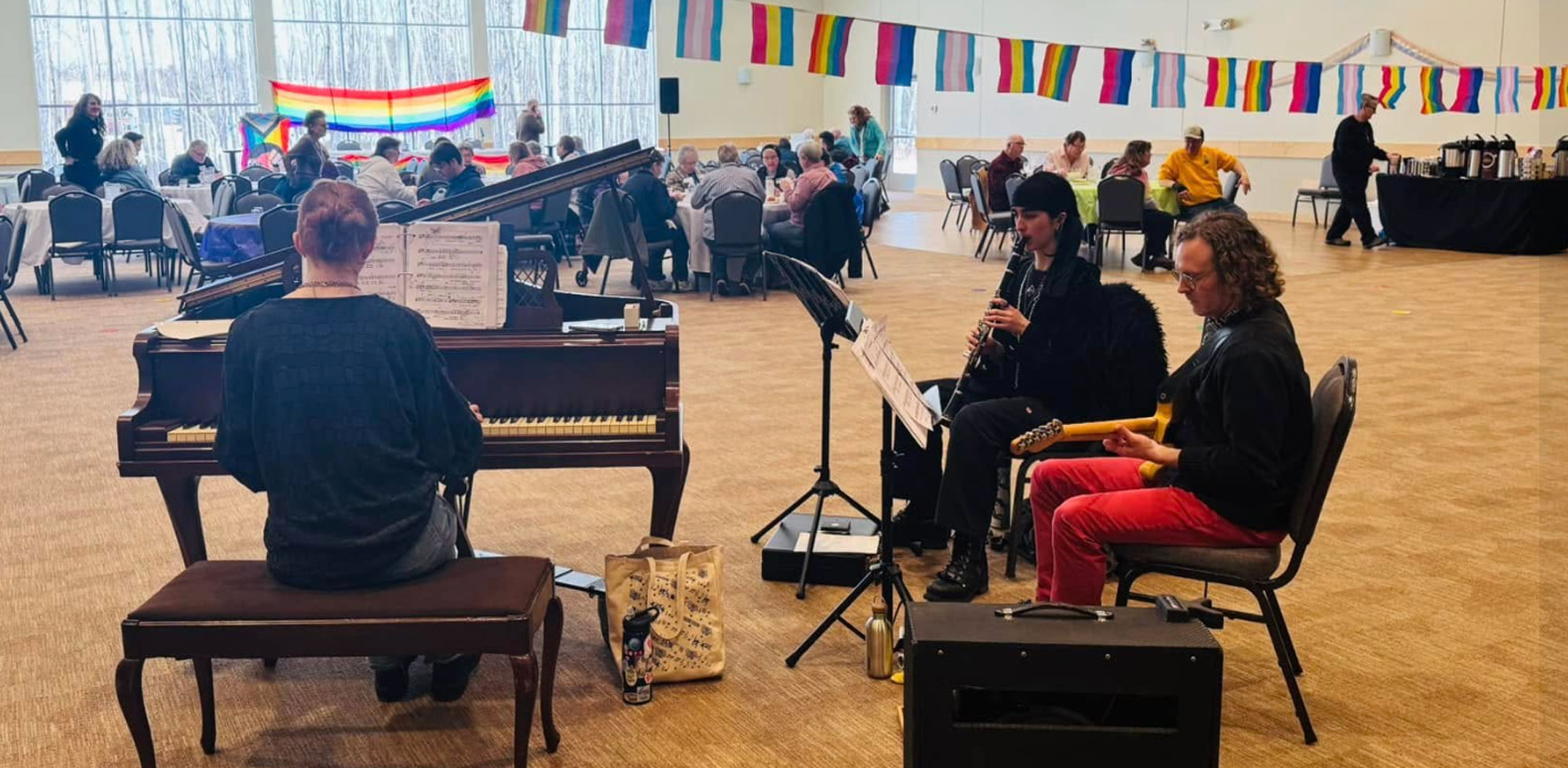
Mondor and four fellow board members created Silver Social, a February gathering designed specifically for LGBTQ+ seniors. The event combines opportunities to socialize with information and resources geared toward older adults, while also welcoming allies and community members.
Joy & Connection grants from the Initiative Foundation helped support the event’s growth, fully funding the second Silver Social and partially supporting the most recent gathering.
When attendees arrived at the Braham Event Center, they were greeted by live piano music, lunch and tables staffed by community organizations ranging from ECM Pride to elder-care and legal-rights groups. The afternoon also included some lighter fare, including a pie walk and drag bingo.
“Our initial idea was a cakewalk,” Mondor said. “But, you know, Braham bills itself as ‘the Homemade Pie Capital of Minnesota.’”
The event is fun and informative, but Mondor said its greatest value may be helping people find community.
Like many older adults, LGBTQ+ seniors can experience increasing isolation as they age. Some attendees have told organizers they feel pressure to hide parts of themselves when they become dependent on caregivers or move into new living situations.
“Attendees tell us, ‘Thank you for being here. It’s really good to find community here,’” Mondor said.
Silver Social has also introduced participants to other LGBTQ+ organizations in the region, including the East Central Men’s Circle and the Purple Circle for gay women.
Sometimes, the connections formed are unexpected.
“Our board member Nathan Johnson’s dad joined him last Silver Social,” Mondor recalled. “He’s an ally, but he wasn’t sure he’d be welcome. He’s a veteran, and he had a really good, deep conversation with a gay man who is a vet. One man was gay, the other was the father of a gay man. It was a powerful, tender moment.”
Different communities. Different challenges. But in a county jail in Little Falls and a community gathering in Braham, the outcome was much the same: people finding a place where they felt they belonged.
Why Connection Matters
- 48% of Minnesotans say they lack companionship at least some of the time.
- 44% say they feel isolated from others at least some of the time.
- 1 in 10 fall into the survey’s “frequently lonely” category.
Source: American Public Media Research Lab’s 2024 “Minds of Minnesotans” survey of 3,399 Minnesota adults: apmresearchlab.org/poll-about-half-of-minnesotans-feel-lonely
The Connection Challenge
Loneliness is often thought of as a personal struggle, but research suggests it is also a community issue. A 2024 American Public Media Research Lab survey found that many Minnesotans experience feelings of loneliness, isolation and disconnection from others, prompting researchers to describe these concerns as part of a broader challenge facing communities across the state.
The findings echo a growing national conversation about social connection and well-being. While loneliness can affect people of any age or background, the survey found especially high rates among younger adults, Indigenous Minnesotans and people who perceive their communities as unsafe.
Programs like the Write On! Workshop, Silver Social and other Joy & Connection grantees approach the issue from a community perspective. Rather than focus on loneliness itself, these programs create opportunities for people to gather, share experiences, build relationships and find a stronger sense of belonging.
The activities may look different, but the goal is the same: helping people feel connected to one another and to the communities they call home.
Bringing People Together
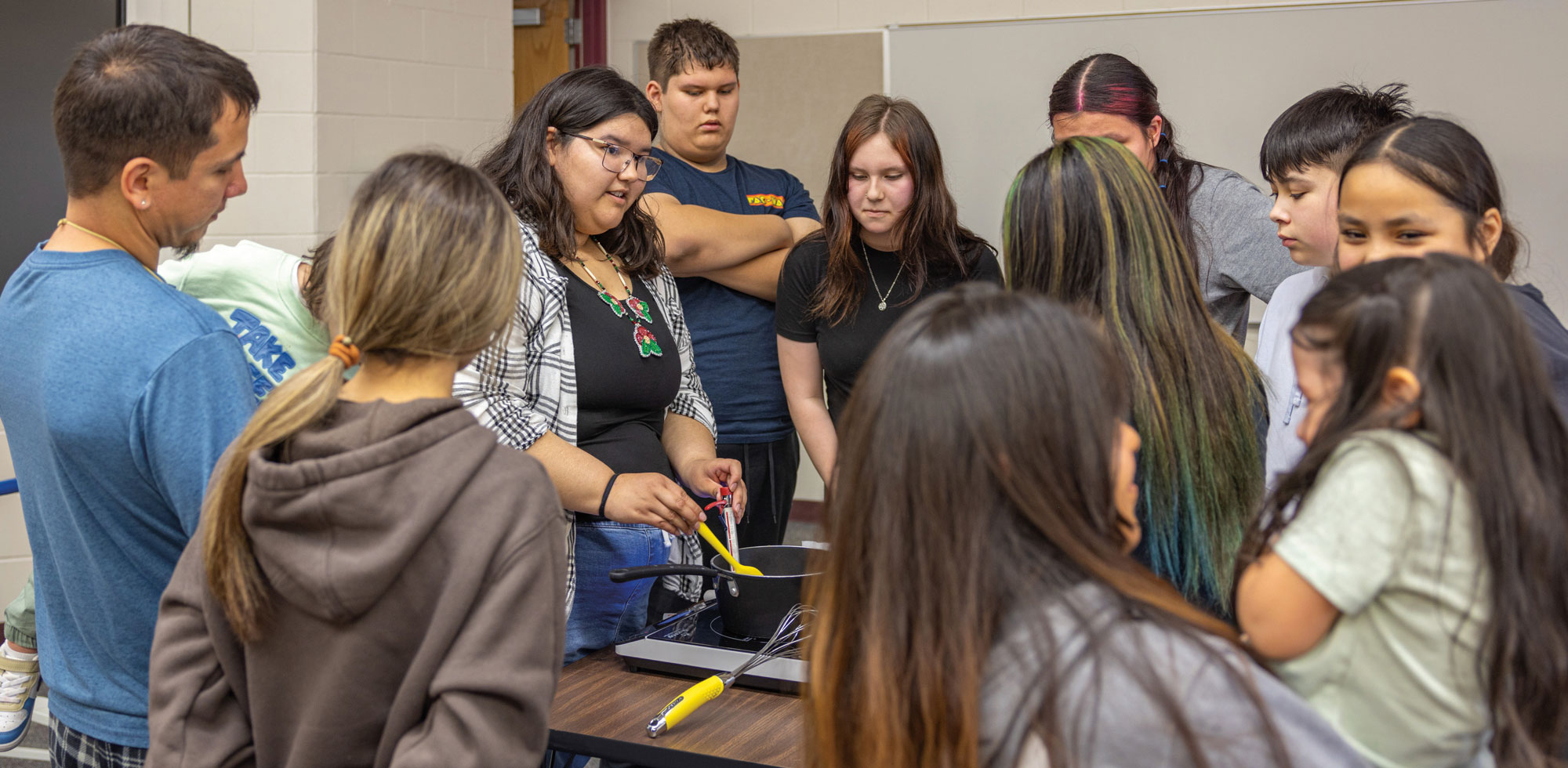
From music and cycling to art classes and community gatherings, Joy & Connection grants are helping Central Minnesotans build friendships, bridge differences and find a sense of belonging.
Since launching the program in 2024, the Initiative Foundation has provided $350,200 through 68 grants to support community-led activities that bring people together and help reduce social isolation.
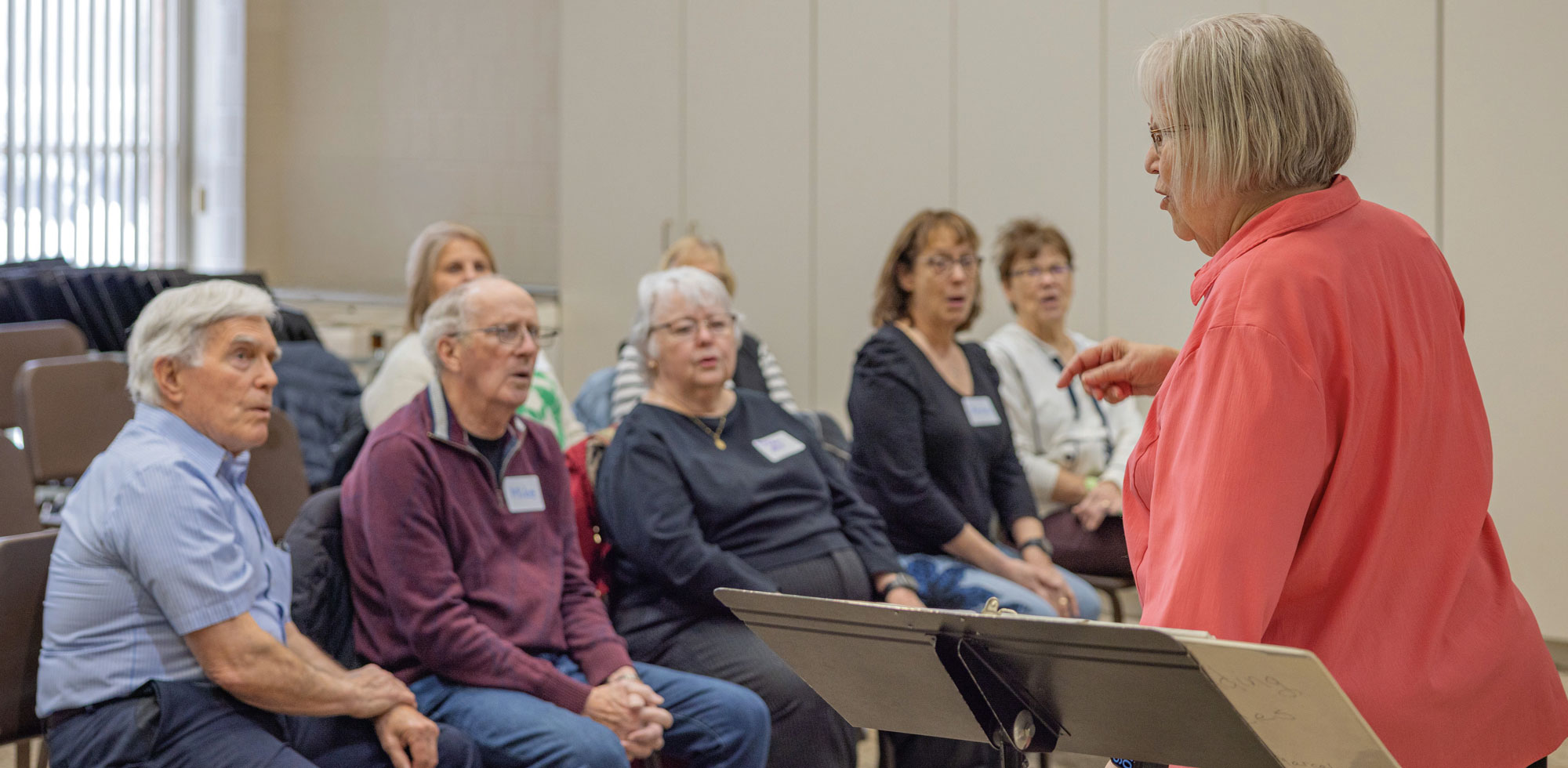 Youth Chorale of Central Minnesota: The Youth Chorale of Central Minnesota received a grant for its Voices Together Memory Choir. The program uses music to bring together people experiencing memory loss and their care partners, fostering a sense of belonging through music.