A Hope, a Prayer—and a Plan
As weather patterns become more extreme, Central Minnesota communities implement plans for long-term stability
By Ava Kian | Illustration by Chris McAllister
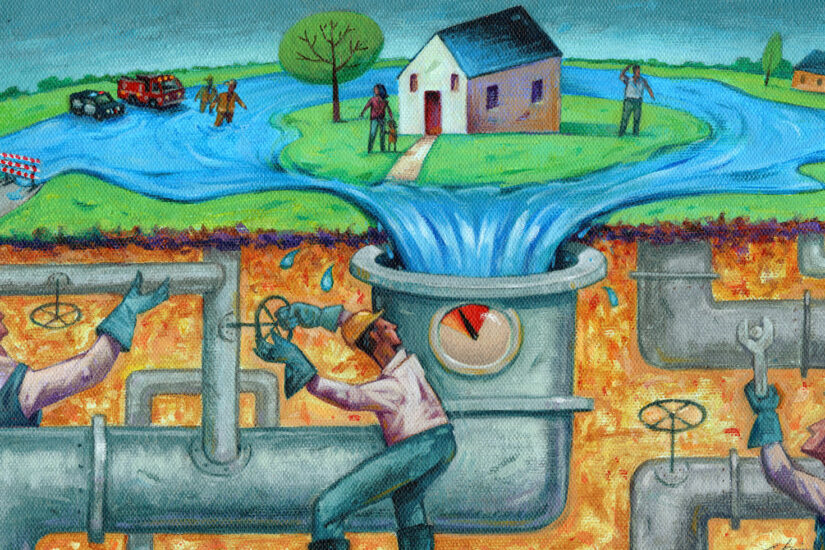
Shifting weather patterns have left many Minnesota cities grappling with extreme conditions that are stretching the capacity of public systems. In Sartell, local officials are responding to repeated bouts of intense flooding that have caused costly damage.
In recent years, heavy rain events have grown stronger across the region, creating mounting challenges for the city, said Anna Gruber, Sartell’s city administrator. And projections from the University of Minnesota Climate Adaptation Partnership indicate the trend is likely to continue.
“When I say flooding events, I mean property damage, both public and private … homes, basements, main levels of some homes, streets for sure,” Gruber said. “It has had a massive impact, particularly on the west side.”
Those heavier downpours are testing existing infrastructure, said Heidi Roop, director of the University of Minnesota Climate Adaptation Partnership. University data indicate Sartell can expect more intense spring and summer rainstorms, along with warmer, drier falls and winters.
“What we do see already across Minnesota, including in the Sartell region, is that there are more intense precipitation events happening across the state, so more rain is falling in a single storm,” Roop said. The region also is experiencing wetter periods followed by sharper dry spells. In addition, winter and spring precipitation totals are projected to rise—not only in overall averages, but in the frequency of powerful storms.
As a result, storms delivering more than two inches of rain—enough to put significant strain on infrastructure—are expected to become more common.
The Cost of Changing
Weather Flooding strains more than streets and basements. It stretches city budgets and personnel. During major storms, Sartell deploys firefighters, emergency responders and police officers to manage road closures, pump water and protect property, said Rob Voshell, the city’s finance and operations director. Repeated events are accelerating infrastructure wear and increasing long-term maintenance costs.
Communities across Minnesota are facing similar pressures, said Elizabeth Mboutchom, the Initiative Foundation’s clean energy and community resiliency program officer.
“The ground cannot absorb that much water that fast, and when it runs into the storm systems, they’re not really designed to handle that much water at one time,” she said.
In response, the Initiative Foundation is helping communities move from reaction to preparation. The Foundation is supporting the development of resilience hubs—trusted community spaces that can serve residents year-round and provide critical support during severe weather. It has also launched a grant program to help local governments assess risk, strengthen infrastructure and plan proactively for more volatile conditions.
“What we’re hearing across communities is the impact of extreme weather—flooding, drought,” Mboutchom said. “The question is how we help them not just respond, but upgrade infrastructure so they’re better prepared and not hit as hard.”
Data from the University of Minnesota’s Climate Adaptation Partnership is guiding that work, providing cities with clearer insight into the specific risks they face and the investments they’ll need to address them.
Solutions in Sartell
Rather than wait for the next storm, Sartell chose to act.
With support from the Initiative Foundation, the city conducted a detailed system analysis that pinpointed vulnerabilities—including a bottleneck in a key stretch of wastewater pipe that struggled to handle intense downpours.
“It’s those events where there’s a lot of rain over a short period of time—that’s when the stress on the system is greatest,” Roop said. The city is now working to upsize portions of its sewer infrastructure to better accommodate the volume of water moving across the landscape during heavy storms.
The analysis revealed another costly issue: During major rain events, clean stormwater infiltrates the sanitary sewer system. That water doesn’t need treatment—but the city still pays for it.
“We discharge all of our sewage to the city of St. Cloud, their wastewater treatment facility, and they bill us per the volume that we send to them,” Voshell said. “So if we’re sending through clean water that doesn’t need to be treated, that’s just more costly for the city and our taxpayers.”
From 2021 through 2023, that unnecessary treatment cost Sartell roughly $40,000 per year in disposal fees, said April Ryan, a principal engineer for the city.
Long-Term Thinking
After identifying weaknesses in its sewer system, Sartell moved quickly to fix them.
City engineers targeted areas prone to flooding, upsized undersized pipes, adjusted watershed infrastructure, added water-quality treatment systems and made roadway adjustments. The goal was straightforward: reduce stormwater infiltration and ease pressure on the sanitary sewer system during heavy rains.
The results are already measurable. Ryan said that during the most recent intense rain events, the city no longer saw the same spikes in flow data—a sign the upgrades are working and costs are coming down.
“It’s significantly reducing the cost of what we’re having to pay for our sanitary sewer because of these flood mitigation efforts,” Gruber said. “Now that we’re on the tail end of it, it’s showing that this is worth the investment.”
The work isn’t over. A $15,000 grant from the Initiative Foundation will allow the city to expand its analysis to other parts of the system, identifying additional areas where clean water may be entering sanitary lines and overloading infrastructure.
Sartell is one of seven communities to receive Initiative Foundation support to strengthen local resilience and prepare for more frequent, severe weather. Additional grants are available in 2026, extending that work across the region.
“It really pays to prepare and make upfront investments like the ones that Sartell is making,” Roop said. “You avoid a lot of costs and damage by planning proactively.”
For Sartell, the lesson is clear: Planning ahead costs less than cleaning up after the storm.
The Initiative Foundation’s Community Resilience Program combines planning, business support and clean-energy solutions to help towns anticipate risks, reduce infrastructure strain and build year-round support systems like resilience hubs—trusted local spaces that offer resources before, during and after emergencies. Visit ifound.org/community-building/community-resilience to learn how Central Minnesotans are planning smarter and building stronger together.