Youth Say Yes!
How a popular school club is helping kids across Central Minnesota see the promise of environmental science and make positive change in their schools and communities.
By Andy Steiner | Photography by Michael Schoenecker
One of the most popular extra-curricular activities at Royalton High School doesn’t involve dribbling a ball or memorizing the lyrics of a Broadway musical. Instead, students set to work creating eco-friendly classrooms and advocating for more opportunities in science, engineering, technology and math (STEM). These civic-minded pursuits are organized by Royalton’s Tech Club/Youth Energy Summit (YES!). Founded by the students just over five years ago, the club is nearly 60 members strong, a big number when you consider that the average grade at Royalton High has 100 students.
“They asked me if they could create their own club,” said tech education teacher and YES! coach Marty Bratsch. “They told me they wanted an extracurricular activity that wasn’t sports-related. Instead, they wanted to do something that could have a larger impact on the community.”
Giving young people the ability to improve the vitality of their hometowns—and the world—is exactly what YES! is designed to do. The program, which was created in 2007 by Prairie Woods Environmental Learning Center and Southwest Initiative Foundation, provides rural Minnesota students in grades 8-12 with opportunities to engage in experiential, hands-on projects that address key environmental opportunities and issues in their schools and communities.
STUDENT-DRIVEN
The idea behind YES! is to get young people excited about STEM-based careers through large-scale, student-driven initiatives that can have lasting environmental benefits.
“The program hits on so many notes that are of interest to us,” said Michelle Kiley, community development program manager at the Initiative Foundation. “It develops leaders. It focuses on community-building and problem-solving skills. And it increases awareness of career, economic and entrepreneurial opportunities in the region. Those are all wins as far as we’re concerned.”
While YES! projects have faculty and staff support, every initiative is developed and completed by students, which proponents say is a key to the program’s success. “We want the energy to come from the students,” said YES! program manager Shelli-Kae Foster. “When young people are passionate about something it is much more likely to get done.”
Students start out by doing an environmental assessment of their school and community to determine the greatest needs. They then come up with a timeline and get started on a project of their design that solves a need.
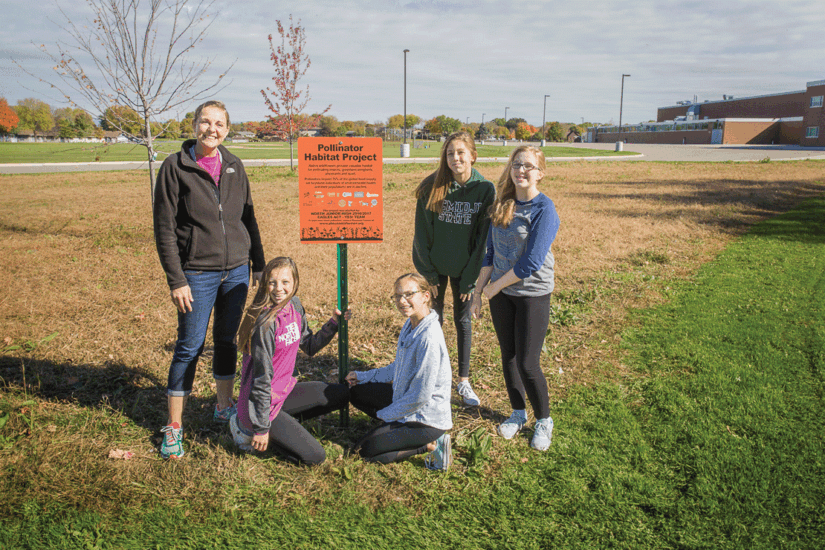
Many of these projects have had a positive impact on Central Minnesota communities. Last year, for example, a YES! team from North Junior High in St. Cloud planted a 1.3-acre plot of pollinator prairie on their school grounds. Today it also functions as an outdoor classroom, complete with benches made by the school’s shop class. The plot not only shores up the natural environment but also raises awareness about threats to pollinators.
While YES! is all about giving kids the support they need to become environmental stewards, the program’s regional and statewide competitions also encourage participants to present their best work and be measured against their peers by teams of volunteer judges—experiences that bolster leadership, public speaking and even design skills.
At the start of the school year, YES! teams from across the state also gather for a Fall Summit, which this year was held at St. John’s University in Collegeville. “It’s a time for kids to meet one another and get project ideas,” Foster said. “After the summit, they go back energized and come up with their projects for the year.” YES! also sponsors winter workshops that help inspire students to move their projects forward. The regional winners then move to the state competition.
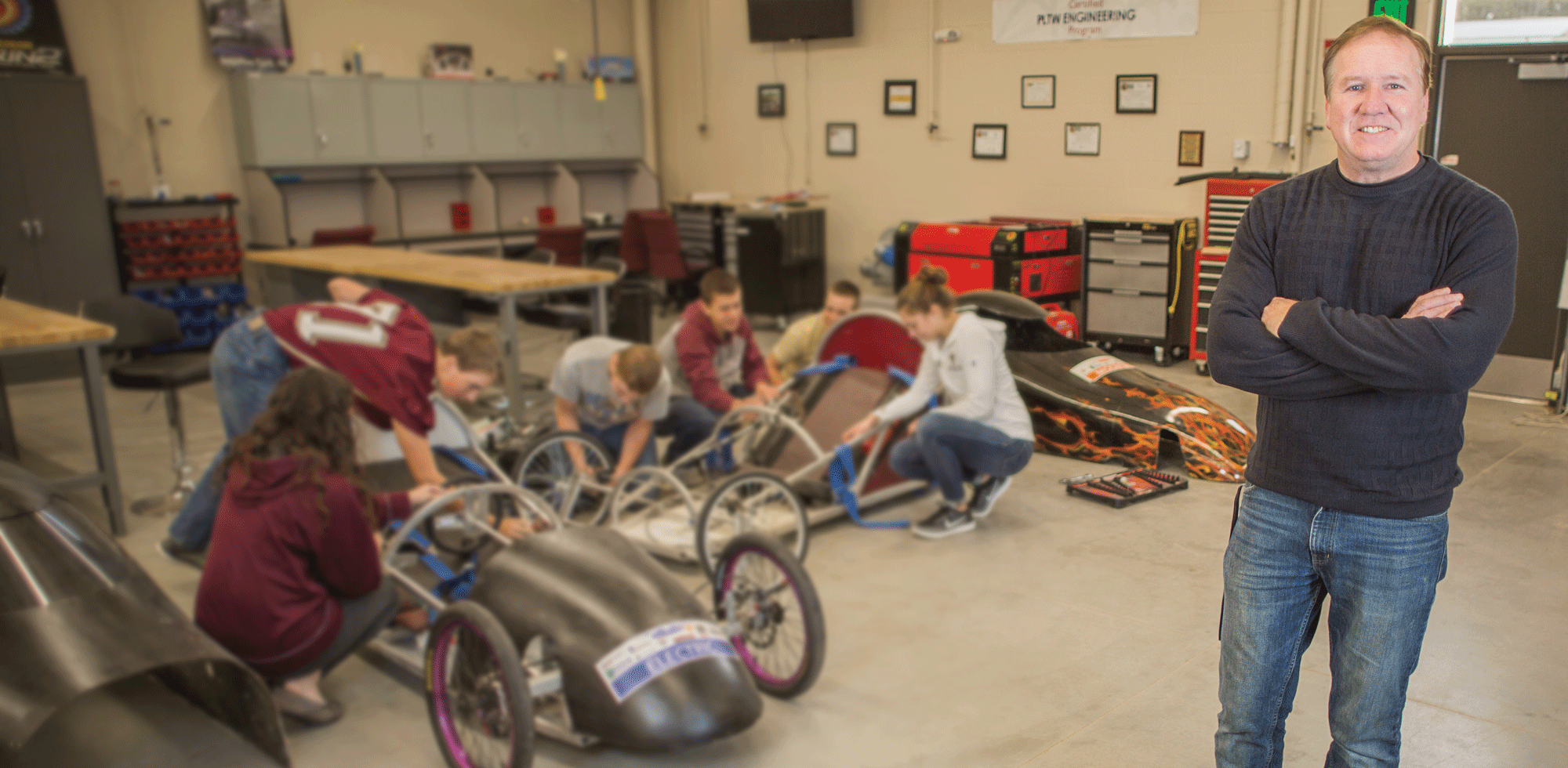
As they get under way with their work, team members collaborate to carefully document their projects so they can present them at a series of online regional competitions that lead to the selection of a statewide champion. St. Cloud’s North Junior High won the 2017 Central Division. This year’s state champ, Glencoe-Silver Lake, accepted its award in May at Target Field in Minneapolis, where the prize was announced during a Twins pregame show. The school’s YES! team has been building and refurbishing supermileage cars for the past several years and participated in the Annual Supermileage Challenge at the Brainerd International Raceway last May. Supermileage teams compete to build vehicles that use the least amount of gas to go a set distance.
FUTURE LEADERS
While YES! teams members are sincerely interested in enhancing their communities through environmental improvements, they also learn about opportunities that could make their futures even brighter. That’s because YES! offers field trips, miniature TED-style talks, and Q & A presentations where students learn about career, economic and entrepreneurial opportunities with an environmental focus. It’s been a big draw at Royalton and other schools across Minnesota.
“These kids care about what they are doing,” Foster said. “Not only are they coming up with projects that matter and will continue after they graduate from high school, YES! is also teaching them 21st-century skills that they can bring into the workforce. They understand the value of that and they’re really interested in landing those jobs.”
At Royalton High School, “most of the students involved in this club are heading to college or a vocational school,” Bratsch said. “They understand that there are careers out there that focus on the environment, and they’re trying to figure out how to get those jobs. They also understand that they can put the work they did with YES! on their resumes and that they can say that they’ve been involved in environmental projects since they were in high school.”
At the fall summit, the kids hear from people who are on the ground working in careers that could interested them, according to West Central/Central YES! Coordinator Ali Dahmes. “Our winter workshops are based around getting students connected with those kinds of people.”
WIDER WORLD
Several years ago, members of Royalton’s YES! Team asked Bratsch if he’d make them a promise. “They asked if I’d consider taking some of them to Italy when they were seniors,” he said. “I told them that if we could find a way to tie a YES! project to manufacturing in Italy, I’d consider it.”
The group rose to Bratsch’s challenge and came up with a number of projects, including a community eco fair at their school. They also worked with the Minnesota Department of Transportation to improve safety along Highway 10 and planted $125,000 worth of native prairie grasses and flowers.
Last spring, a group of 12 students and instructors traveled to Rome. They presented their projects to groups of Italian students, scientists, academics and community members, including their work on a high-mileage electric car and a solar boat, and how to organize a local oil-recycling program.
Inevitably, YES! members’ view of the world expanded. “They said, ‘We do a lot of projects at home. Do you do anything like that in Rome?’” explained Bratsch. “They exchanged ideas, were able to learn tips and give advice.”
The environmental focus helps drive the message home that the projects are not just window dressing—they are important gifts that have the long-term potential to improve life in their communities. “I think involvement with YES! helps students feel like they can be a force for positive change, even as middle- or high-school students,” Foster said. “Through this work, they learn that they can make a big impact. Their voice is heard.”
Bratsch likes to remind his YES! team that the impact of their projects will live on long after they are gone. “The kids realize that we are not just passing through,” he said. “We are all part of this community. We are part of the world. If they are going to leave something positive behind, YES! is one way they can do that.”
Gear Heads
Robotics is one of the most popular school-based clubs in Minnesota.
A decade ago, if someone had told Les Engel that robotics teams would eventually among the most popular school-based clubs in the state of Minnesota, he would’ve laughed.
“I’m a metallurgical engineer,” Engel said, “so to me that’s great news. But it still feels hard to believe that robotics has gotten to be such a popular activity.” In fact, there are now more robotics teams than there are hockey teams in Minnesota.
That robotics has taken off in such a robust way—Minnesota, with the third-highest number of robotics teams in the country, regularly holds high-octane competitions of hundreds of young competitors—is good news to folks like Engel, who make their living building and operating machines that tackle tasks formerly performed by humans.
As president of the Central Minnesota Manufacturing Association (CMMA), Engel is pleased to see any activity that encourages young people to think about careers in his industry: It’s a sector that’s in desperate need of skilled workers. Qualified applicants willing to stay in the region can have their pick of good-paying jobs.
“CMMA is all about trying to develop the workforce,” Engel said. “It’s a big problem, and we’re constantly looking for ways to tackle it.”
These days, Engel and his CMMA colleagues see robotics as one way to get kids to see the exciting challenges that come with manufacturing work. They hope that through popular clubs and high-stakes competitions, young people will begin to see that jobs in their industry are much more than assembly line work.
CMMA members regularly provide sponsorship money for robotics teams (robotics kits can cost as much as $5,000). They also mentor students as they prepare for competition and volunteer to judge entries. The Initiative Foundation also supports teams and provides grants for major robotics competitions.
“It’s important to get kids to realize that there really is a future in all of these kinds of jobs,” Engel said. “Robotics allows students to not only learn how to design things in their heads but also to work as a team to build a working robot. It’s amazing. Getting kids excited about these clubs is a great way to introduce them to a whole world of work that’s right under their noses, just waiting for them.”