The Power of Local Leadership
From small-town business owners to regional planners and volunteers, Central Minnesotans have spent four decades working with the Initiative Foundation to strengthen their communities—with partnership and investment helping turn local ideas into lasting change.
By Laura Billings Coleman
As executive director of Chisago County HRA/EDA, Nancy Hoffman is often on the road, meeting with people in the communities she serves and making connections to help build the area’s housing options and business opportunities. But when COVID-19 hit in March 2020, all that forward motion came to a hard stop as she and her small team turned their attention to helping local businesses survive a long season of uncertainty.
Working long hours from home, and attending endless webinars about state and federal emergency funding, Hoffman helped distribute more than $3.3 million in relief funds to 274 businesses, the vast majority of them mom-and-pop shops in the Chisago County area with no other safety nets for surviving the sudden loss of cash flow and customers.
“I remember how different it felt from the way I used to spend my days, and the loneliness and concern we felt for the community,” she remembered.
Yet in spite of that isolation, Hoffman knew she was not alone, thanks in part to the support of the Initiative Foundation. Working alongside leaders like Hoffman, the Foundation infused more than $26.5 million into the region through grants to local businesses, while pausing loan payments and sponsoring programs about online marketing and other strategies to help small businesses pivot through the pandemic.
During those early months, Hoffman recalled an informal economic triage system that developed between her team and Initiative Foundation staff as they worked to deliver relief to the region. “We wanted to reach as many people as we possibly could,” she said, noting that businesses that didn’t qualify for funding through her office often found help through the Initiative Foundation, and vice versa.
The Initiative Foundation, in turn, relied on Hoffman’s deep connections and knowledge of the region to help target community lending and other investments. “She’s a champion, connector and builder across the eastern part of our region and has been aligned with us in so many different ways over the years that we really trusted her perspective,” said Initiative Foundation President Brian Voerding. “If Nancy told us she believed in someone, that carried a lot of weight.”
As the pandemic receded and recovery began, the Initiative Foundation continued its support for the region. Using private matching funds, it multiplied $4.5 million from the state’s Minnesota Main Street Economic Revitalization program into $14 million in project investments around the region. Today, those funds are helping communities solve problems and celebrate the survival of small businesses, from building a new Brainerd Family YMCA childcare center to renovating and expanding Long Prairie’s Dairy Queen and drive-in movie theater.
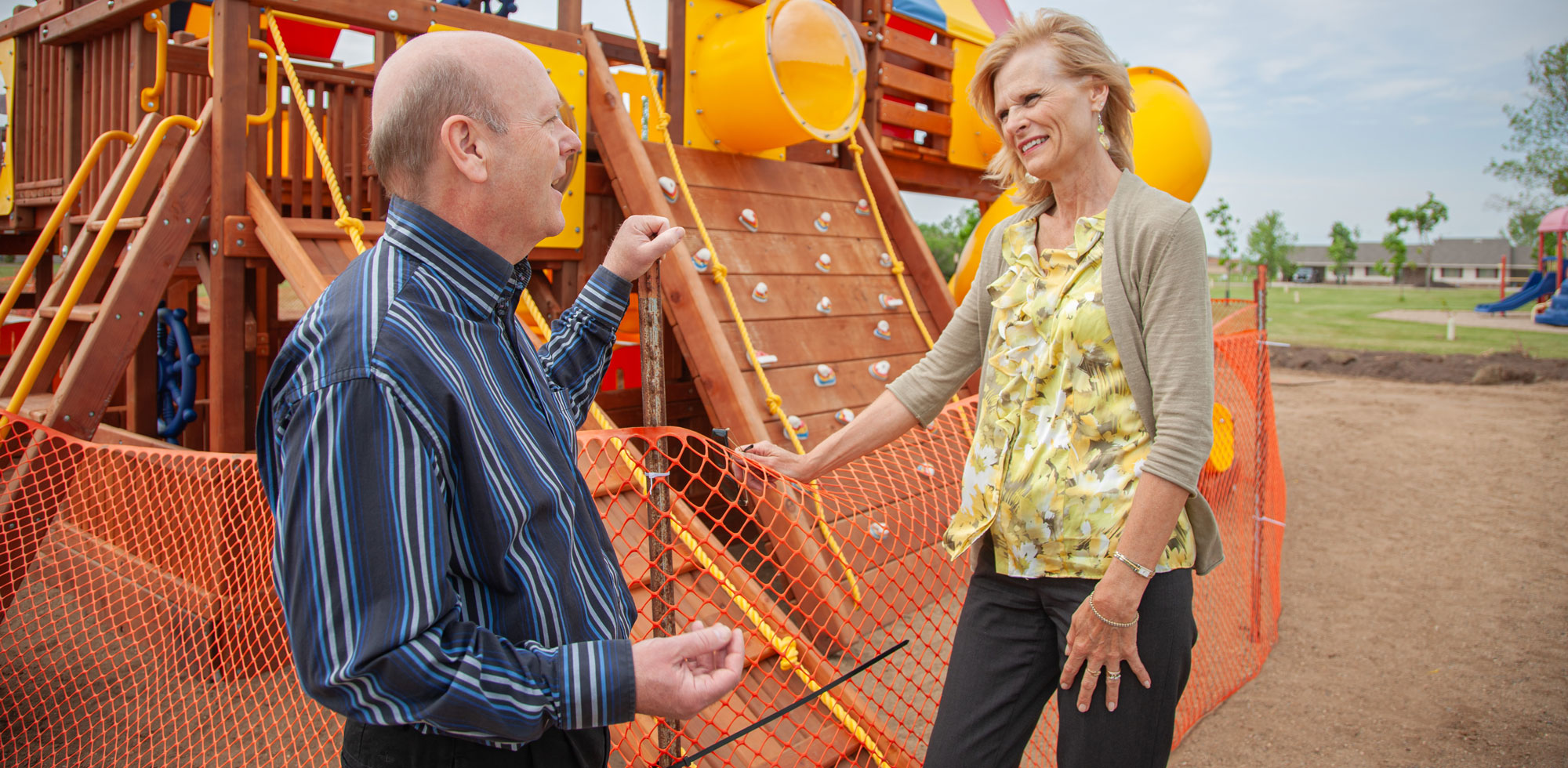
In Chisago County, which saw a 4 percent surge in population after the pandemic, Initiative Foundation funding recently helped Hoffman’s team create a new strategic plan for economic growth—as well as a new housing study to drive future decision-making. Hoffman said she appreciates that the Initiative Foundation doesn’t take a one-size-fits-all approach to revitalizing small towns, relying instead on ideas from the communities they serve. “They’ve been our partners in nearly everything, and an incredible resource and support,” she said. “They listen, and then they work hard to help make things happen.”
Philanthropy + Lending
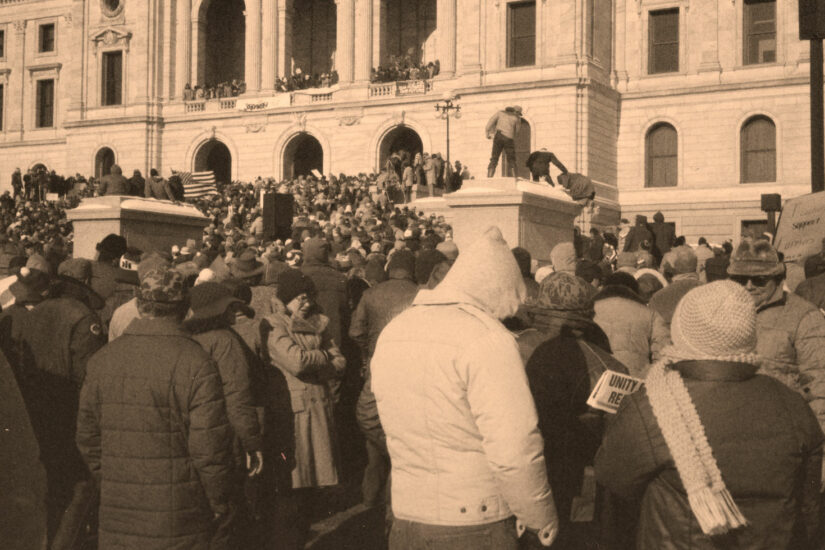
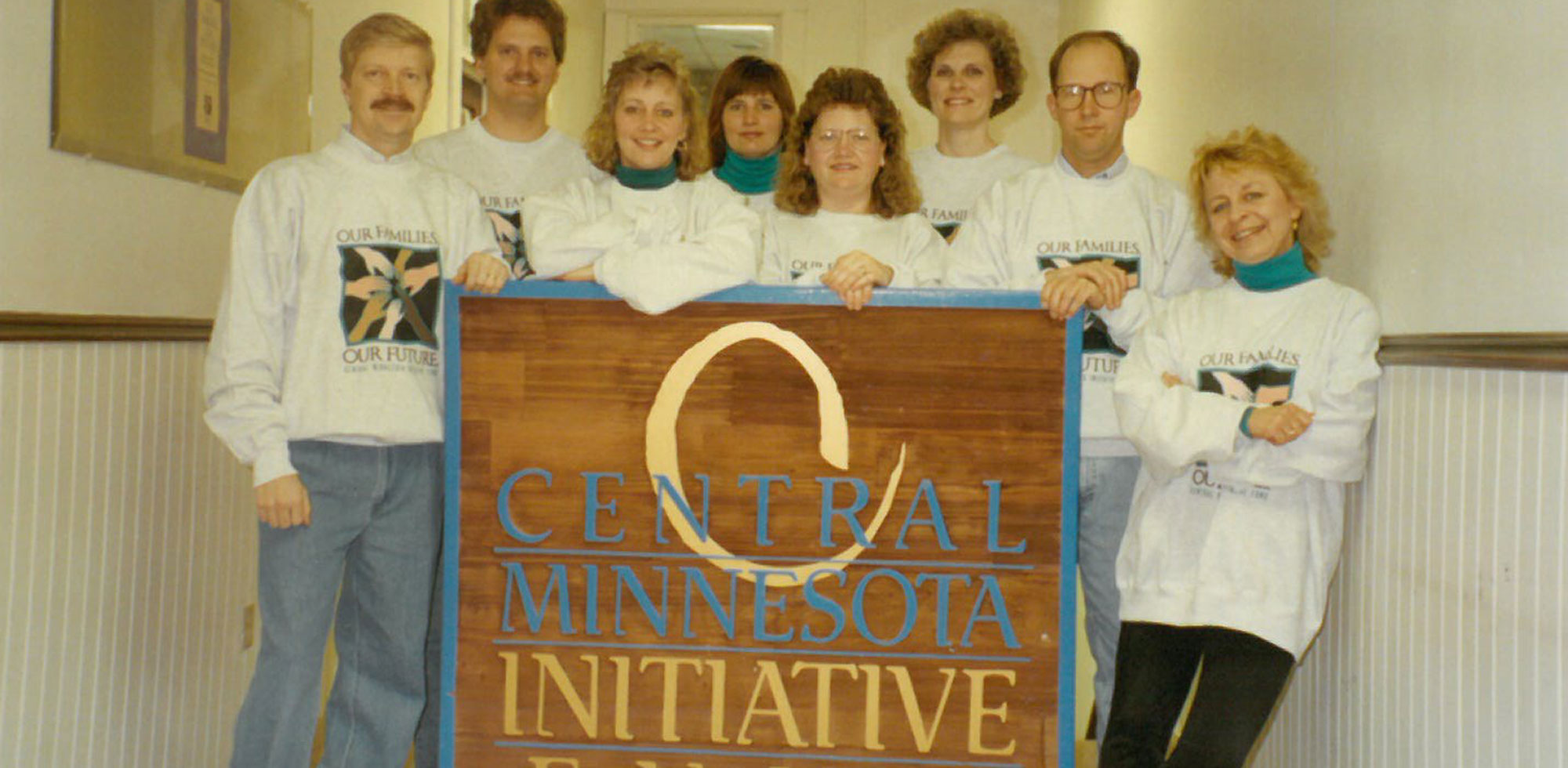
Listening closely to the needs of rural Minnesota has been a feature of the Initiative Foundation since its founding 40 years ago. Created in the wake of the 1980s farm crisis, the Initiative Foundation grew from a series of listening sessions conducted throughout the state by leaders from the McKnight Foundation, one of the state’s largest charitable organizations. As Greater Minnesota struggled with the loss of family farms, manufacturing and mining jobs, high unemployment, and a slow recovery from the recession, the Minneapolis-based foundation was eager to explore how philanthropy and charitable giving could bring relief to rural areas.
“Philanthropy didn’t have that much of a formal presence in Greater Minnesota, so there was just a lot we didn’t know,” recalled Kathy Gaalswyk, who served as the Initiative Foundation’s founding president from 1986 to her retirement in 2016. Created as a constellation of six regional entities, the Minnesota Initiative Foundations — the Initiative Foundation, serving Central Minnesota, Northwest Minnesota Foundation, West Central Initiative, the Northland Foundation, Southwest Initiative Foundation and Southern Minnesota Initiative Foundation – effectively doubled charitable giving in outstate areas in its first year alone.
But months of meetings with farmers, miners, business owners, and civic leaders also revealed that rural communities needed new ways of infusing capital into local economies. While charitable institutions are traditionally prohibited from engaging in community lending, McKnight made a case to the IRS, arguing that lending to businesses in stagnant rural economies with high poverty and unemployment rates qualified as a charitable activity. The federal government agreed and authorized the six foundations to add business lending to their roster of community services. It’s believed to be an only-in-Minnesota approach that’s become a national model for rural revitalization.
“It’s easy to look back and celebrate the Initiative Foundation model created across the state, and the tremendous impact of four decades of grassroots philanthropy. But the truth is that when we began, we literally had no idea how it would turn out, or if we would even exist after a couple of years of initial funding,” Gaalswyk said. “What we did know was that people in Greater Minnesota mattered, that they were the key ingredient to success, and that we needed to set up a framework for those local voices to be heard, to create, and to move to action to build stronger communities and businesses for the sake of children and families.”
With its focus on Central Minnesota, the Initiative Foundation’s investments and programs have mirrored many of the decades-long demographic shifts and economic trends in the region, from encouraging communities to plan for the massive generational leadership succession with the retirement of the Baby Boomers, to promoting broadband coverage to connect small towns to digital opportunities.
Through programs such as the Enterprise Academy and the Initiators Fellowship, the Foundation sought to identify and develop the skills of next-generation leaders. For small towns with big dreams, support from the Foundation’s Thriving Communities program has helped towns with fewer than 5,000 residents make plans and solve problems. A flexible portfolio of programs has also allowed the Foundation to respond to the area’s most urgent needs, from community funds to support Wadena’s recovery after a devastating 2010 tornado, to providing strategic investments and technical support to help rural communities find sustainable solutions to the region’s child-care shortage.
“This unique structure has allowed the Initiative Foundation to do a hundred things at once — being a community foundation, a lender, a grantmaker, a coalition builder, a wealth holder and recirculator,” said Voerding, noting that the Foundation’s deep connections across Central Minnesota proved critical during the pandemic. “There was no time of greater, more concentrated investment and moving of dollars into Central Minnesota than there was during the first two years of COVID.”
As for the McKnight Foundation’s role, President Tonya Allen said the relationship has evolved from McKnight being a primary funder to a trusted partner. Forty years later, she notes, the creation of the so-called “Minnesota Initiative Foundation model” remains one of McKnight’s “most successful long-term investments in place-based, locally led philanthropy.”
“The Minnesota Initiative Foundations have shown us repeatedly that rural Minnesotans have the talent, networks, aspirations and entrepreneurial spirit needed to thrive—especially when they have access to the flexible tools and decision-making authority needed to lead,” she said. Since 1986, the McKnight Foundation has invested hundreds of millions across the Minnesota Initiative Foundations, and today they are all financially stable. It’s evidence “of the strength, independence and sustainability that locally driven solutions can achieve,” Allen said.

Everyone at the Table
Allen said one of the best examples of the Initiative Foundation’s impact can be seen in Becker, which has been working to diversify its economy for the last decade following Xcel Energy’s decision to decommission the coal-fired Sherburne County Generating Station. Back in 2014, this announcement from the town’s top employer—representing 77 percent of the local tax base—was devastating, recalled Dan Weber, assistant Sherburne County administrator. But with a 10-year timeframe for making an energy transition, the community took advantage of all the resources available through the Initiative Foundation.
“The Foundation filled two important roles, as a community facilitator and as a financial development organization,” said Weber, who has since become a trustee of the Initiative Foundation. “In the early days, instead of having a lot of separate meetings, they were able to bring all the stakeholders to the table and have those hard conversations about what a drastic change this was going to be for the community and the region,” he said.
With the help of Don Hickman, the Foundation’s former vice president for community and workforce development, who retired in 2025, the coalition found funding opportunities that helped them form a plan for the region. For instance, a $2,500 grant from the Foundation paid for a consultant who helped the community secure a $1 million rail grant, while three $200,000 grants from the McKnight Foundation helped the community leverage more than $27 million in state bonding to improve infrastructure needed to attract new business. New employers that have since bought into Becker’s future include Northern Metals Recycling, which relocated from Minneapolis, and Microsoft, which purchased 300 acres of land from Xcel Energy for a planned data center.
“Fast forward more than a decade, and Becker is now home to one of the largest solar farms in the country and one of the greenest industrial parks in America,” Allen said. “They’re showing the world how communities that powered our last energy system can be at the center of our thriving clean energy future. And in true Minnesota fashion, these community leaders didn’t stop there; they partnered to establish a State Energy Transition Office to help other communities like theirs facing similar challenges.”
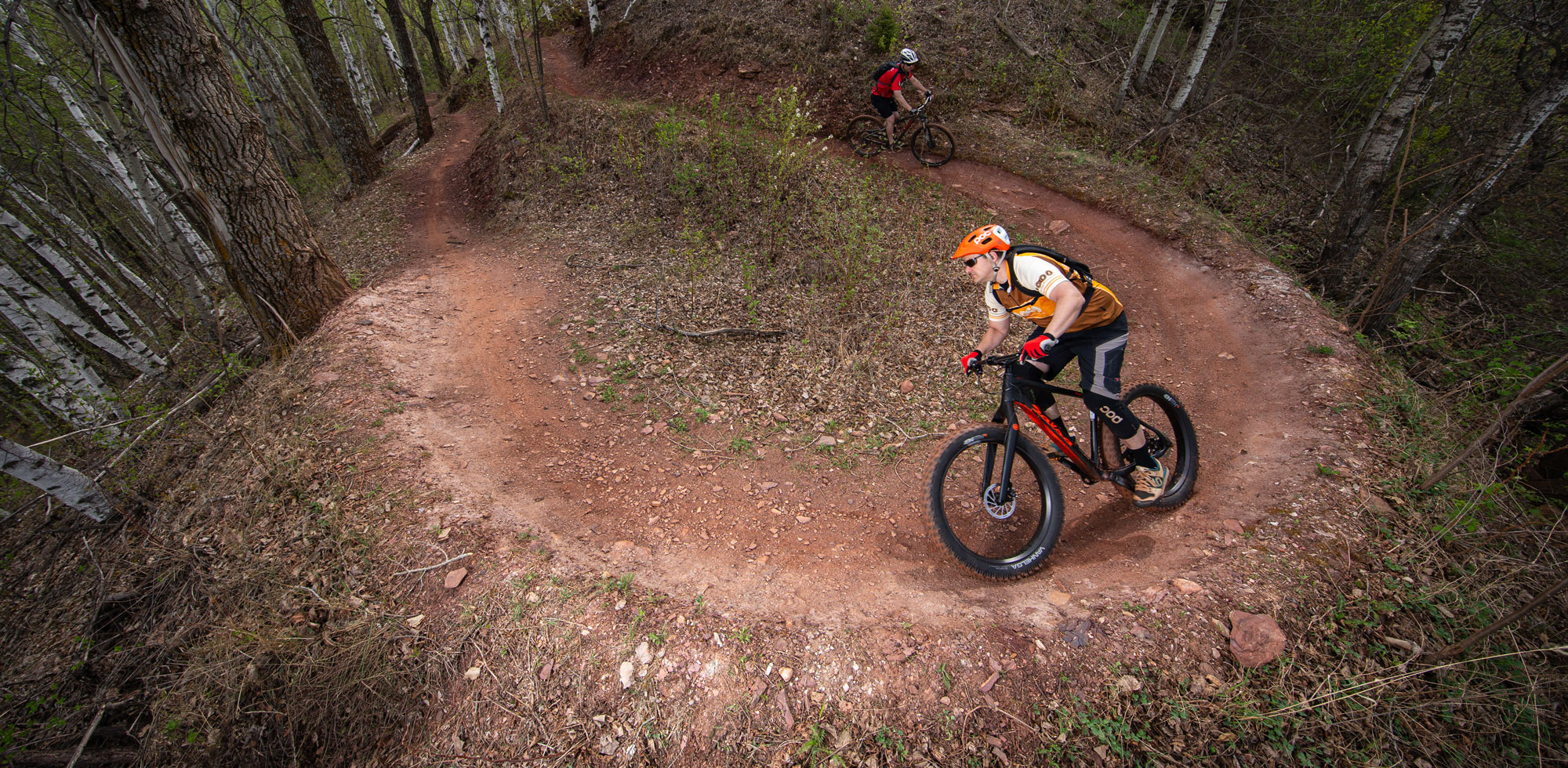
Becker’s not the only Central Minnesota community where a small investment from the Initiative Foundation has yielded an exponential return. Two decades ago, the Initiative Foundation provided a $2,500 grant to the Crosby-Ironton community for a feasibility study to explore the potential of expanding abandoned mine pits into a mountain-biking destination. The plan seemed a bit pie-in-the-sky to all but the most fervent mountain biking enthusiasts.
“This was before trails were cool, and I would say at the time, there wasn’t much hope that it would ever work,” said Aaron Hautala, former president of the Cuyuna Lakes Mountain Bike Crew, which went on to champion the project. While the first 25 miles of trail helped to attract about 20,000 visitors a year, raising about $2 million annually, “it wasn’t enough to truly change the economics of the place,” he said. But when a subsequent study found that adding about 50 more miles of single-track trails could bring in twice as many visitors and $21 million in potential economic impact, Iron Rangers started paying attention.
“I’d be lying if I said the entire community was behind us—they weren’t,” he said. “That’s why the most important thing we learned from the Initiative Foundation is that you can’t do things all by yourself—you really have to get out of your silo and build relationships with everyone if you want something to work.”
Through years of community meetings and listening sessions, some facilitated by the Foundation, “we saw that once people could see the vision we had, and once they understood that there were steps to get to that vision, people united and ignited at the same time,” Hautala said. “I’ve never seen, before or since, a movement like that in my life, where you could feel the energy. It made people want to be part of it.”
For the Next Generation
Today, the community surrounding the Cuyuna Country State Recreation Area (CCSRA) has been transformed with bike shops, a brewery, boutique cabins and lofts, and visitor tallies that far exceed the best-case scenarios predicted two decades ago. While early champions hoped for about 50,000 annual visitors, the CCSRA during the pandemic attracted more than half a million visitors. Crosby-Ironton’s economic transition from mining to tourism has brought some growing pains to the region, with a rise in short-term rentals and real concerns about how to keep housing affordable.
That’s where programs like the Foundation’s Thriving Communities come in, providing coaching, resources, planning grants, and implementation funding for communities seeking new ways to manage growth, attract new business, and sustain small-town life. Relaunched in summer 2025, the program has pulled together a cohort of leaders from five communities–Braham, Motley, Sebeka, Staples, and Taylors Falls.
Providing coaching and resources to communities across the region has been a consistent part of the Initiative Foundation’s work for 40 years. But Dan Weber said stable leadership has also been an important strength of the organization, even despite generational leadership transitions. Over four decades, the Foundation has had just three presidents: Kathy Gaalswyk, who served from 1986 to 2016; Matt Varilek, who now serves as commissioner of the Minnesota Department of Employment and Economic Development; and Brian Voerding, a Wright County native who took on the president’s role in 2023.
“That kind of steady leadership is something to care about, because when you build trust with an organization, and a new leader comes in, you want to keep building on that trust,” Weber said. ‘All three of those leaders truly believed in what they were doing. It wasn’t a job to them. It was something that they believed in their heart. And anytime you have that kind of passion in a leadership position, it seeps down to the rest of the organization.”
Voerding says the Foundation’s four decades of partnership across Central Minnesota have built a track record of trust that he and his staff don’t take lightly. “We don’t have any politics, we don’t have any ideologies, we don’t have any baggage, but we do have a lot of trust in this region, which often makes the Initiative Foundation the right partner for investing in small towns, and supporting the capacity of people to be leaders in their communities,” he said.
“I continue to be so moved by just how powerful it is to have a presence here, and to really believe in people, uninterrupted,” he said. “In those early meetings that shaped the Initiative Foundation, there was a shared understanding: if you believe in people and support the work, great things are possible.”